
Most writing problems are not really writing problems. They look like writing problems: the stuck cursor, the flat draft, the sentence rewritten eleven times. But underneath, they are often relationship problems. The writer is trying to communicate clearly with someone they have not yet fully learned to understand. This is the quiet realization that shaped The Wordsmith Studio, and the reason audience work sits at the center of how I think about communication. Before the blank page, before the strategy doc, before the launch plan, there is a relationship being formed —or not formed — between a writer and a reader. Everything else builds on that.
I did not arrive at this belief through theory. I arrived at it through years of watching thoughtful, capable people struggle with their messaging in ways that had very little to do with their skill, and almost everything to do with how clearly they could see the person on the other side of the screen.
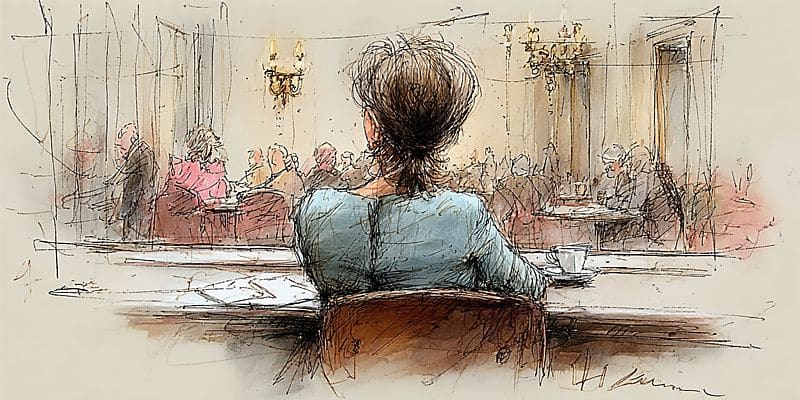
Most writing advice starts too late
There is a strange pattern in the way business writing is taught. The advice almost always begins at the page:
- Write better hooks.
- Tighten your subject lines.
- Use this formula for your sales emails.
- Open with a story.
- Cut weak verbs.
- Add a P.S. line
None of that is wrong, exactly. It's just downstream of the actual problem.
By the time you're staring at the cursor, the conditions for whether the writing will land have largely been set. Either you understand the person you're writing to, or you're guessing. Either you have a real sense of what your reader is carrying, hoping for, suspicious of, tired of, or you are filling in the silence with assumptions borrowed from other people's audiences. The blank page is a late symptom of an earlier missing piece. The writing feels hard because the relationship is unclear.
That's why, when I notice someone agonizing over a sentence, I rarely think the issue is the sentence. The sentence is just where the difficulty becomes visible. The actual difficulty is further upstream, in whether you can sense who you are speaking to clearly enough to know what that person needs to hear.
What if your writing problem is a relationship problem?
This is the question I keep returning to. When a writer tells me their content falls flat, my first instinct is not to look at their content. It is to look at how clearly they can describe the person they are writing for, not in marketing-deck language, but in human language.
Not their demographic categories. Not their pain points listed in a column. The actual reader.
What does that reader say to themselves at the end of a long day? What have they already tried? And what do they secretly suspect about other people in their industry? What do they want underneath the thing they say they want?
Most of the time, the writer's description goes thin quickly. There is a vague composite. A category. A guess. Which makes the writing make sense. Of course it feels flat. The writer is speaking into a fog. They are addressing a silhouette and hoping a real person steps into the shape.
Good writing rarely sounds like good writing. It sounds like recognition. Like, oh, this is for me. Like someone saw something true and named it without making the reader feel exposed. That kind of writing cannot be generated through better verbs. It comes from knowing the reader well enough that the right verbs become obvious.
The sentence is just where the difficulty becomes visible. The actual difficulty is further upstream.
Understanding has to come before language
There is an order to communication that we usually skip past: understanding, then orientation, then language. Most people start at language and try to reverse-engineer the rest.
And it almost works. Writing built from clever language without understanding beneath it can technically perform. It can get opens and likes. It can get the occasional sale. But it tends to leave the writer feeling oddly disconnected from their own business because the words are trying to do the work the relationship hasn't yet earned.
I've watched this happen to people who are genuinely good at what they do. Their offers help. The craft is sound. Their values are real. But their messaging carries a kind of generic shimmer, a polish that flattens whatever made them specific. And it's not because they lack talent. They've just been taught to optimize words rather than deepen understanding. The words can only carry so much weight on their own.
When understanding comes first, the language gets easier. Not always faster, but easier. The writer stops performing and starts speaking. The reader stops scanning and starts listening. Something quiet shifts in the relationship, and the writing starts to feel like writing again, instead of like guessing.
The strangers we keep writing to
One of the weirdest things about online business is how often we write to people we have never met, will never meet, and have not seriously tried to imagine.
We inherit the idea of our reader from somewhere: a course, a podcast, a coach, a composite of everyone we have ever seen in our industry. Increasingly, we inherit them from AI-generated audience profiles and customer avatars as well. At what point does the summary become more familiar to us than the person it was meant to represent?.
These tools are useful. They help us organize what we know. But they can also create a feeling of familiarity that isn't quite the same thing as understanding. A list of traits can tell you what a reader does. It can't tell you what keeps them staring at the ceiling at two in the morning wondering if they're getting this whole thing wrong.
Few of us are ever taught to examine that inheritance. And then we wonder why our content feels distant.
So many entrepreneurs say their writing sounds like everyone else's. It does, because they are writing to the same imagined stranger everyone else is writing to. The reader in their mind is not their actual reader; it's a market-flavored shadow of one.
The shift that changes everything is small and slow.
It is the willingness to put down the inherited reader and start paying attention to the actual one. The person who replied to your last email with something honest. The client who said the thing nobody else has said about your work. The follower who has been quietly reading for a year. The friend who described what you do better than you did.
These are the people teaching you who you are actually speaking to. What happens when we pay more attention to the audience in our heads than the people already responding to our work?
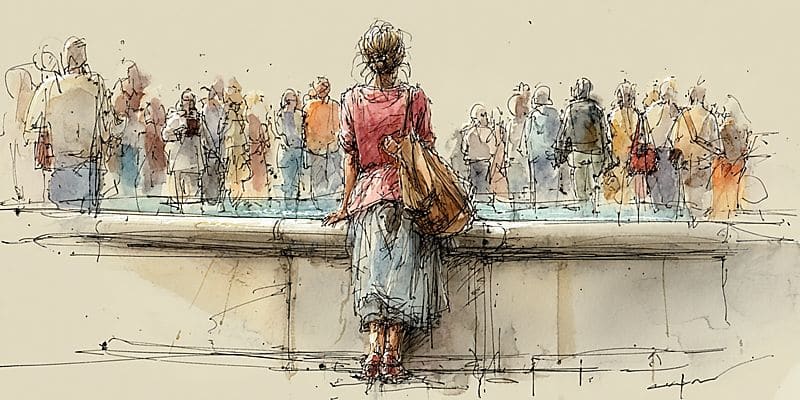
What happens when you actually know who is reading
When you know the person on the other side, a lot of things stop being problems.
The blank page gets quieter. You are not inventing the reader as you write. You already have a sense of them, so the writing becomes less about guesswork and more of a conversation you happen to be typing.
The overthinking softens. Most overthinking is not perfectionism. It's uncertainty about audience. The writer cannot whether to trust the sentence because they cannot clearly picture the person on the other side of it. When the reader becomes clearer, fewer sentences feel risky.
The content calendar stops feeling like a content calendar. Ideas appear because you keep noticing things about your people, and noticing is generative. You write less from obligation and more from response.
The sales pages get less anxious. Persuasion stops feeling like pressure, because you are no longer trying to convince a stranger of something. You are reflecting back something your reader already half-knows, and offering the next step.
None of this is magic. It is just what happens when the relationship gets clearer. Clarity creates movement, in the writer first, then in the reader.
Why this became the foundation of how I work
I did not set out to make audience work the heart of The Wordsmith Studio. It became the heart slowly, after enough rounds of watching writing problems turn out to be understanding problems in disguise.
Someone would come to me wanting help with their sales page, and within twenty minutes the conversation would move past the page entirely, into who they were trying to reach, what those people were actually wrestling with, and which parts of that they had quietly avoided looking at. The sales page got better simply because the writer's sense of the reader sharpened.
Someone else would arrive frustrated with their email list, convinced they needed better subject lines. The subject lines were fine. The relationship was thin. They had been broadcasting at their list instead of speaking to it. Once they started writing to a person instead of a list, the metrics moved on their own.
This kept happening. It still happens. And after enough repetition, I had to admit: I was not really a copywriting studio. I was a place where people came to learn their people, and then learned how to write from that learning.
For a while, I resisted that realization. After all, people were hiring me to help with words. Website copy. Emails. Sales pages. Messaging. The writing was supposed to be the work.
But the longer I did it, the more I noticed the same pattern. The breakthrough rarely happened when we found the perfect headline. It happened twenty minutes earlier, when the conversation drifted away from the page and toward the people reading it.
That is what audience work is. It's not research, exactly. It is not avatar-building. It is the patient, ongoing practice of sensing the human on the other side clearly enough that your writing has somewhere real to land.
Why this matters more than craft
I care about craft. I have spent years on it. But craft without understanding is decoration, and decoration is the first thing readers tune out.
I love writing that inhabits a moment. Not writing that reports on an experience from a distance, but writing that seems to be standing inside it. That kind of writing begins long before the words arrive. It begins with attention. You notice the details. The contradictions. The things people say and the things they almost say. Then, somehow, you help the reader feel what you felt when you noticed them.
The writing is only the translation. The noticing comes first.
That is what I want for the people I work with. Not better hooks. Not slicker copy. A clearer sense of who is on the other side of the page, so the writing can stop being a guess and start being a conversation.
Most writing advice starts too late. The work I care about begins earlier, in the quiet space before the page, where the relationship gets formed. Everything that matters in the writing flows from there. Learn how in my Rooted Customer Profile Course.